

Here's the thing nobody tells you about newborn checklists: they're almost always organized for the store, not for you. You get a big column of car seats next to a big column of burp cloths next to a big column of swaddles, and you're left trying to figure out which of these needs to be in your house on the day you walk through the door — and which ones you have three weeks to sort out.
The answer matters more than it seems. Overbuy too early and you'll have a nursery full of gear your baby won't use for months, sized wrong, or not needed at all. Underbuy and you're sending a bleary-eyed partner to Target at 2 a.m. for nipple cream. Neither is fun.
So this checklist is built by stage, not by category. Work through it in order, and you'll know exactly what needs to be sorted before the birth versus what you can figure out once baby arrives and starts showing you who they are.
Stage 1: Before Birth — The Non-Negotiables
These are the items that need to be in place before you leave for the hospital. No exceptions, no "we'll figure it out when we get home."
Safe sleep setup. A firm, flat sleep surface with a fitted sheet — whether that's a crib, bassinet, or bedside sleeper. The CDC and the American Academy of Pediatrics both recommend a bare sleep surface: no pillows, no bumpers, no loose blankets. Get this sorted and assembled before your due date.
Car seat, installed. You cannot leave the hospital without one. Have it installed before 37 weeks and get it checked at a local inspection station if you have any doubt about the fit. A rear-facing infant seat works for most newborns, but check the weight and height minimums — some newborns are small enough that not every seat fits them safely from day one.
A feeding plan and the gear to match it. If you're planning to breastfeed, have nipple cream, nursing pads, and a good nursing bra ready. If you're formula feeding or combining, have bottles, a brush, and formula on hand. You don't need to commit to one approach, but you do need supplies for both in case your plan changes in the first 48 hours — because it often does.
Diapers and wipes (newborn size). Don't overbuy newborn diapers — many babies outgrow them within weeks. A smaller supply to start is smarter than a warehouse of a size your baby may skip entirely.
A few going-home outfits. Pack two or three sizes. Newborn sizing is genuinely unpredictable, and you want options.
Swaddle blankets. Two to four muslin swaddles. These are workhorses in the first weeks — swaddling, nursing covers, light layers, impromptu burp cloths.
Stage 2: Week One at Home — Survival Mode
Week one is not the time to be assembling furniture or figuring out the baby monitor app. Everything you need this week should already be out, charged, and within arm's reach.
Burp cloths — more than you think. Six to eight minimum. You'll go through them faster than feels possible.
A baby thermometer. Rectal thermometers are the most accurate for newborns. Have one ready before you need it, because when you need it, you'll need it immediately.
Diaper cream. Even if your baby doesn't have a rash yet, you'll want it on hand. Apply it preventively at changes and you may avoid a rash altogether.
A bouncer or rocker. This is the item most parents wish they'd had ready from day one. When you desperately need to put the baby down somewhere that isn't flat — to eat, to shower, to exist — a bouncer is the answer. You don't need anything elaborate; simple is fine.
White noise. A dedicated white noise machine, a fan, or an app — whatever works. The womb is loud. Silence is actually harder for newborns to sleep in than most parents expect.
A nightlight for the nursery or bedroom. Bright overhead lights at 3 a.m. wake everyone up more than necessary. A dim, warm nightlight makes night feeds much easier to recover from.
Postpartum supplies for the birthing parent. This is not optional. Peri bottle, heavy-duty pads, comfortable underwear, stool softener, and snacks. Recovery is real and it starts the day you get home.
Stage 3: Weeks Two Through Four — You're Starting to Know Your Baby
By week two, you've had a few nights to observe your baby. You know whether they fight the swaddle or love it, whether they'll sleep flat or only in an incline, whether they cluster feed or go longer stretches. Now you can fill in the gaps based on what's actually happening.
A baby carrier or wrap. If your baby is a contact napper — and many are — a carrier lets you get things done without putting them down. Try a stretchy wrap for newborns if you want something gentle and close. If you're not sure yet, wait until week two or three to buy, because some babies take to carriers immediately and some don't.
A baby monitor. If baby is sleeping in your room, you may not need this yet. But if you're transitioning them to a separate space, even just a bassinet in the hallway, a monitor gives you peace of mind without constant checking.
A breast pump, if breastfeeding. Many parents wait until milk supply is established before pumping. Check your insurance — in the US, many plans cover a pump at no cost. Confirm coverage and have it ordered by week two so it's there when you're ready.
Size 1 diapers. Most babies move out of newborn sizing around this window. Stock up on size 1 now rather than buying ahead earlier.
A baby bathtub. Sponge baths only until the umbilical cord stump falls off, which typically happens in the first few weeks. Once it does, a small infant tub makes bath time much more manageable than a sink or adult tub.
Nail clippers or a file. Newborn nails grow fast and are surprisingly sharp. A baby-specific nail file or soft scissors make this less terrifying than it sounds.
Stage 4: Months Two and Three — Room to Grow
By month two, the fog is lifting slightly. Your baby is more alert, starting to track faces, and may be giving you the first real smiles. This is when developmental play starts to matter — and when you can start thinking beyond pure survival gear.
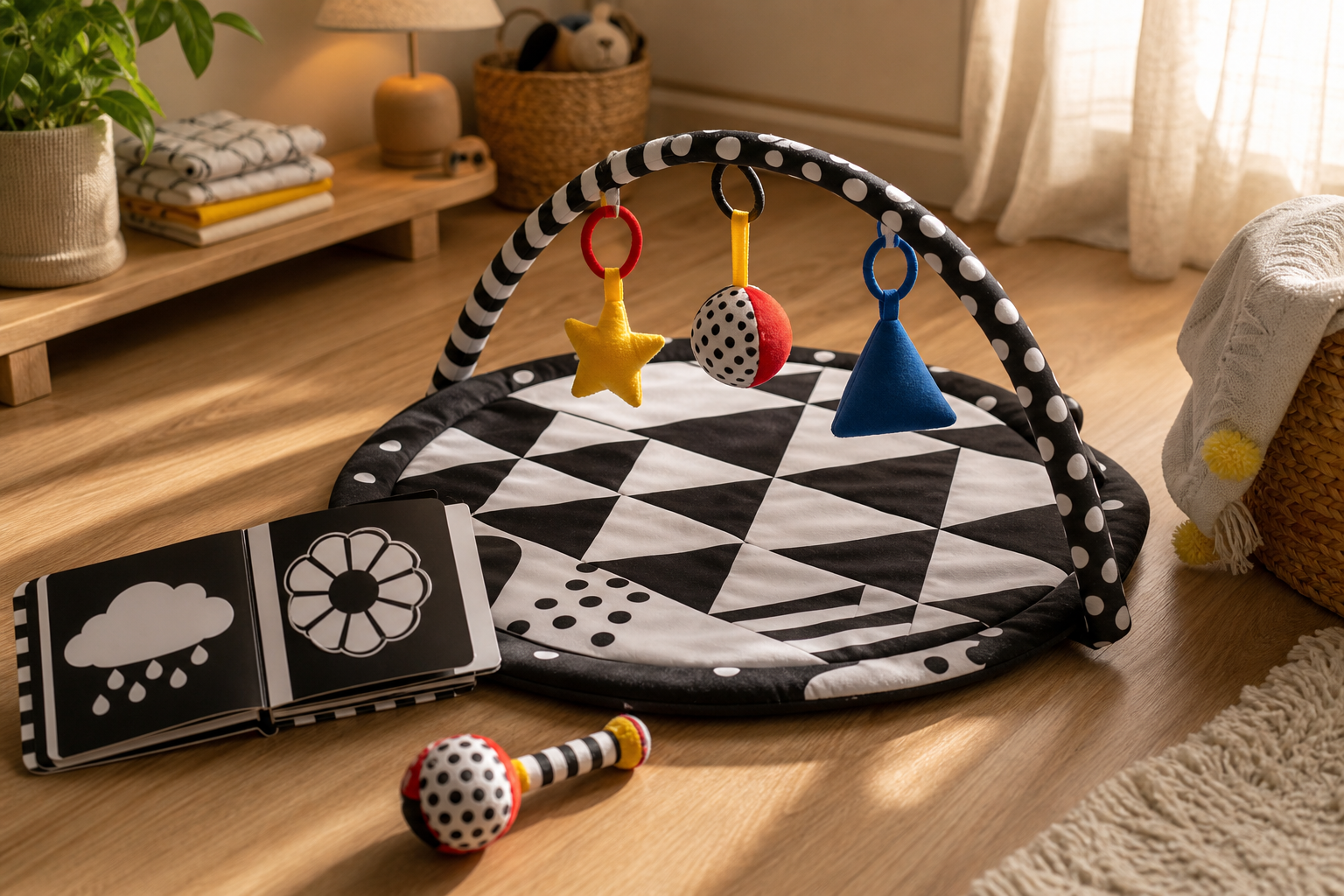
A play gym or activity mat. Tummy time is important for neck and shoulder strength, and a padded mat with hanging toys makes it more engaging for baby and less of a battle for you. Introduce this around weeks six to eight when babies start tracking objects.
High-contrast toys and books. Newborn vision is limited, but by month two, babies respond strongly to high-contrast black-and-white patterns. Simple board books and rattles with clear shapes are genuinely useful at this stage, not just cute.
A baby swing. Some parents need this from week one; others find their baby doesn't take to it. By month two you'll know. If you've been borrowing one or going without, this is a reasonable time to invest if you haven't already.
A larger clothing haul. Most babies are solidly in 0–3 month or 3–6 month sizing by now. If you've been gifted a lot of newborn clothes, pass them on and size up. For a practical guide to layering outfits as the seasons change, this layering guide for 0–24 months is a useful reference.
A high chair (on your radar, not necessarily purchased). You won't need it until around four to six months when solids start, but if nursery space is tight or you're eyeing a specific model, this is a good time to research it without the pressure of needing it immediately.
A Few Things That Can Almost Always Wait
Wipe warmers, bottle sterilizers, dedicated changing tables, and most nursery décor items are nice to have but not urgent. So are most baby gadgets that promise to solve a problem you haven't encountered yet. Buy for the stage you're in, not the stage you're imagining.
The same goes for toys. Before month two, babies don't really play — they observe, sleep, and eat. Save the toy budget for when they can actually use them.
Print It, Use It, Adjust It
Save or print this checklist and use it to build your prep plan — then find everything on it at cutebabybuy.com, shipped from the USA. Work through Stage 1 first, get Stage 2 physically ready before your due date, and let the later stages fill in as your baby shows you what they actually need. That's the whole system. It won't be perfect, but it'll be a lot less chaotic than a 200-item master list sorted by category.
Frequently Asked Questions
How many newborn diapers should I buy before the baby arrives?
Keep your newborn-size diaper supply modest — a single smaller pack or two is usually enough to start. Many babies outgrow newborn sizing within the first few weeks, and some larger babies skip it entirely. It's much easier to buy more size 1 diapers as you go than to return or donate a mountain of newborn ones you never used.
Do I really need a separate baby bathtub?
A dedicated infant tub isn't strictly required, but it makes bath time significantly safer and easier. A standard kitchen sink or adult tub is hard to control a slippery newborn in, and the ergonomics are rough on your back. A small infant tub with a hammock or sling insert gives baby a secure position and keeps your hands free. Wait until the umbilical cord stump falls off before attempting any kind of submersion bath — sponge baths only until then.
When should I start tummy time?
Most pediatricians recommend starting tummy time from the very first days at home, in short sessions — even just a minute or two at a time on your chest counts. The goal is to build neck and shoulder strength gradually. By month two, babies are usually ready for a play mat or activity gym to make the sessions more engaging. Always supervise tummy time and never leave a newborn face-down unattended.
Is a baby swing worth buying before birth or should I wait?
This one is genuinely hard to predict — some babies love swings from the start, others couldn't care less. If budget allows, having one ready from week one can be a lifesaver if your baby is a contact napper. If you'd rather not gamble, wait until weeks two or three when you have a clearer picture of your baby's preferences. Many parents borrow one first to test the waters before committing to a purchase.

