

You asked one question — glass or plastic baby bottles? — and two hours later you've read seventeen Reddit threads, three parenting forums, and a blog post that somehow blamed both options for different things. Nobody gave you a straight answer. They just handed you more to worry about.
Here's the thing: there's no universally correct answer. But there is a right answer for your situation — based on how you feed, where you feed, and who's doing the feeding. Let's work through it practically.
The Core Trade-Off, Honestly Stated
Glass bottles are heavier, more fragile, and more expensive upfront. Plastic bottles are lighter, cheaper, and more forgiving when dropped — but not all plastics are created equal, and that's where the anxiety usually starts.
Neither material is inherently dangerous when you're buying from reputable brands. The key is knowing what each one actually means for your day-to-day life, not just in theory.
What Glass Does Well
Glass doesn't absorb odors or stains, which means after a few months of formula or breast milk, it still looks and smells clean. It also handles temperature changes well — you can go from the fridge to warm water without worrying about the material reacting. And because glass is non-porous, it's genuinely easy to confirm it's clean after washing.
If you're exclusively home-feeding — nursing station in the nursery, kitchen sterilizer always on — glass fits that routine comfortably. The weight isn't a problem when the bottle is sitting in a boppy or you're holding a newborn in a chair.
The honest downside: glass breaks. One slip on tile and you're dealing with shards near a baby. Some parents solve this with silicone sleeves that cushion the bottle and improve grip. But if you're handing bottles to a toddler who throws things, glass gets complicated fast.
What Plastic Does Well
Plastic is light enough that a baby can hold their own bottle earlier. It travels without the anxiety of breakage — in a diaper bag, at daycare, on a flight. And for nighttime feeds when you're half-asleep and fumbling in the dark, a dropped plastic bottle just bounces.
The concern most parents have is about chemicals leaching from plastic, particularly BPA. This is a legitimate concern with older or low-quality plastics. The FDA banned BPA from baby bottles and sippy cups, so any bottle sold in the US today should be BPA-free. That said, "BPA-free" doesn't automatically mean all plastics are identical — it's worth checking what a bottle is actually made from and buying from brands with clear material disclosures.
One practical note: plastic does scratch over time, and scratches can harbor bacteria. Replace plastic bottles when they start looking worn, and avoid abrasive brushes that accelerate scratching.
The Questions That Actually Decide It
Skip the abstract debate. Answer these instead:
- Where does most feeding happen? Mostly at home in a chair → glass is fine. On the go, at daycare, or in the car → plastic wins on practicality.
- Who else is feeding the baby? A caregiver, grandparent, or older sibling handling bottles regularly? Lighter plastic reduces the chance of drops.
- How old is your baby? Newborns don't hold their own bottles. Toddlers do — and toddlers throw things. Glass and toddlers are a trickier combination.
- How are you sterilizing? Both glass and BPA-free plastic are generally dishwasher and sterilizer safe, but always check the specific product's instructions.
- What's your budget for replacement? Glass lasts longer if it doesn't break. Plastic needs replacing more often as it wears. Factor in the full cost, not just the sticker price.
Can You Use Both?
Yes — and plenty of parents do. Glass at home for the controlled environment, plastic in the bag for everything else. There's no rule that says you have to commit to one. If that hybrid approach matches your life, it's a perfectly sensible call.
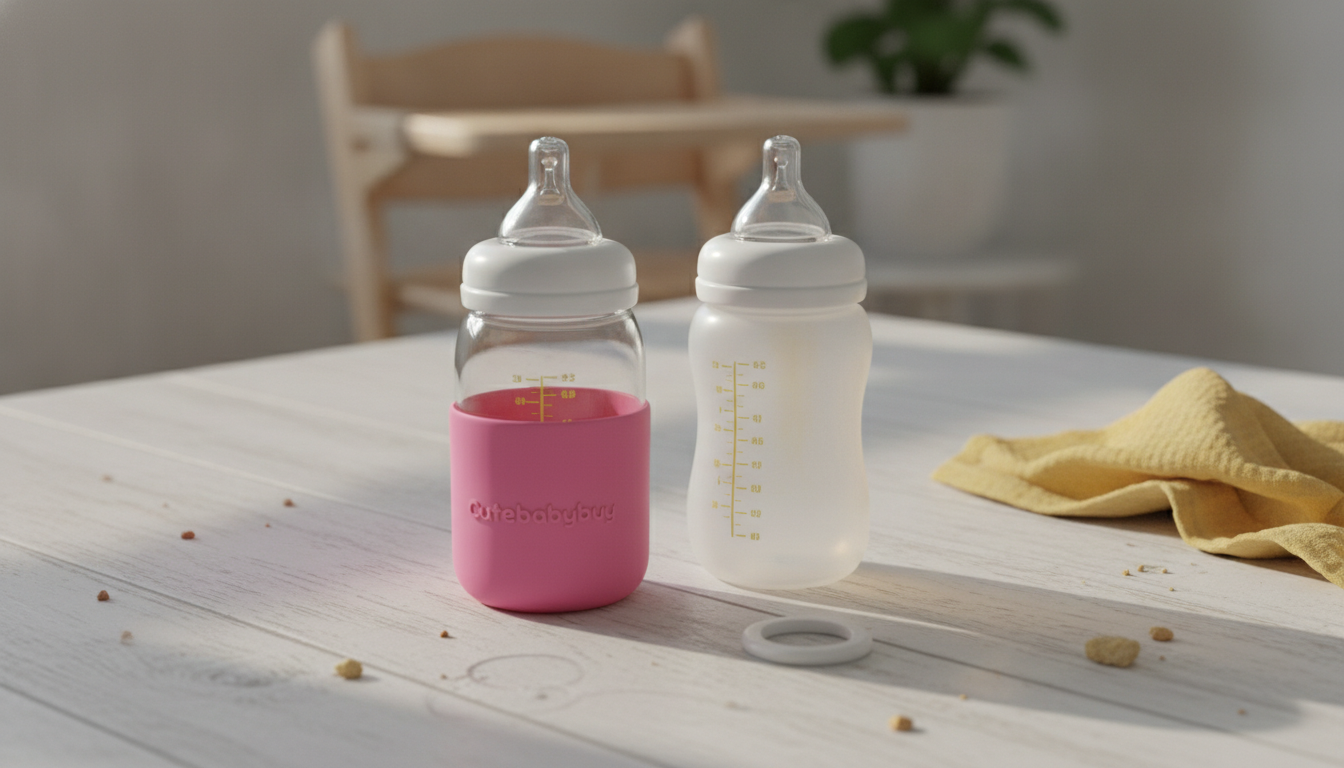
A Word on Nipples and Fit
Whatever material you choose, the nipple matters just as much. Flow rate, shape, and how well it mimics a natural latch all affect whether your baby accepts the bottle and feeds comfortably. Most bottles come with a slow-flow nipple for newborns — you'll likely need to move up in flow rate as your baby grows. Browse the bottles and nipples collection at Cutebabybuy to see what's available across both materials and flow rates.
If you're also navigating the breastfeeding-to-bottle transition, the shape of the nipple can make a real difference in how smoothly that goes. It's worth looking at breastfeeding accessories alongside your bottle choice — they often work together as part of the same feeding setup.
The Bottom Line
Glass isn't safer because it's glass. Plastic isn't dangerous because it's plastic. The right bottle is the one that fits how you actually feed your baby — your schedule, your hands, your daycare situation, your budget. Make that call with confidence and move on. You've got enough to think about.
Ready to stop deliberating? See the bottles available at Cutebabybuy and find the right fit for your feeding setup.
Frequently Asked Questions
Are plastic baby bottles safe to use in the USA?
Yes — BPA has been banned from baby bottles and sippy cups sold in the US, so any bottle on the market today must be BPA-free. That said, it's still worth buying from reputable brands that clearly disclose what materials they use, and replacing plastic bottles once they show visible scratching or wear.
Do glass baby bottles keep milk warmer for longer?
Glass does retain heat a little differently than plastic, but neither material is designed to keep milk warm on its own for extended periods. Always test the temperature of warmed milk on your wrist before feeding, regardless of which bottle material you use.
At what age can babies hold their own bottle?
Most babies start attempting to hold their bottle somewhere around six months, though it varies. This is one reason many parents switch from glass to plastic as their baby becomes more mobile — a lighter bottle is easier for small hands, and a dropped plastic bottle is a lot less dramatic than a dropped glass one.
How often should I replace baby bottles?
Plastic bottles should be replaced when you notice scratches, cloudiness, or any damage to the material — scratches can trap bacteria that's hard to clean out. Glass bottles don't degrade the same way, but should be replaced immediately if they chip or crack. Always inspect bottles before each use.

