

You pick up an organic cotton onesie, fall in love with how soft it feels, then flip the tag and quietly put it back on the rack. Every parent who's tried to shop organic on a real budget knows this moment. The intention is there. The price gap is also very much there.
Here's the thing: you don't have to go all-in on organic to make smart choices for your baby. The key is knowing which pieces are genuinely worth the premium — and which ones aren't, because your baby will outgrow them in six weeks anyway.
What "Organic" Actually Means on a Clothing Label
When a baby garment is labeled organic, it typically means the cotton was grown without synthetic pesticides or fertilizers. Certifications like GOTS (Global Organic Textile Standard) go further, covering the entire production chain — from the field to the finished fabric — including the dyes and finishing chemicals used.
Conventional cotton isn't inherently dangerous once it's been washed and processed into fabric. The concern parents often raise is about residual chemicals from farming and manufacturing that may remain in the textile. For most healthy babies, the risk from a conventional cotton outfit is low. But for babies with sensitive skin, eczema, or known allergies, the argument for organic gets stronger — especially for items worn close to skin for hours at a time.
That distinction — how long and how directly a garment touches your baby's skin — is the most useful filter you have.
Where Organic Fabric Genuinely Earns Its Price
Think about the clothes your baby wears for the longest stretches without a break. These are the pieces where the quality of the fabric matters most.
Sleepwear and sleep sacks
Your baby spends more time in a sleep onesie or sleep sack than in almost any other single garment. Eight to twelve hours of direct skin contact, night after night. If you're going to prioritize organic anywhere, this is it. Softer fabric also tends to be less irritating on the neck and wrists, where newborn skin is especially delicate.
Bodysuits and vests worn against bare skin
The classic snap-crotch bodysuit sits directly on your baby's torso all day. It's the base layer for everything. Because it doesn't get covered by an outer layer for most of the day, the fabric quality is in constant contact with your baby's skin. Worth spending a little more here.
Anything worn during newborn weeks
Newborn skin is more permeable and more reactive than older baby skin. The first few weeks, when your baby is essentially living in a swaddle or a soft onesie, is the window where organic fabric makes the most intuitive sense — even if you dial back on it once they're a few months old and tougher.
Where Conventional Cotton Is Perfectly Reasonable
Not every item in your baby's wardrobe needs to be organic. Here's where you can confidently save the money.
Outerwear and jackets
A fleece-lined jacket or a puffer vest sits over layers of other clothing. The direct skin contact is minimal. Spend on warmth and fit, not on organic certification.
Occasion outfits
The holiday romper. The birthday dress. The "grandma's visiting" sweater. These get worn for a few hours, photographed extensively, and then retired. Organic fabric here is a lovely bonus but not a practical priority.
Pants and leggings with a bodysuit underneath
If there's already a layer between the fabric and your baby's skin, the case for organic on the outer layer is much weaker. A well-made pair of conventional cotton leggings is a perfectly good choice.
Fast-growth sizes (newborn through 3 months)
Babies can outgrow a size in weeks. Spending a premium on a garment your baby wears for a month before it's too small is genuinely hard to justify. Buy a few quality organic basics in these sizes, but don't feel obligated to build a full organic wardrobe for a stage that passes so quickly.
A Simple Framework for Shopping Smarter
Before you add anything to your cart, run it through two quick questions:
- How long will this touch my baby's bare skin in a single stretch? The longer the answer, the more organic fabric earns its keep.
- How long will my baby actually fit this size? The shorter the answer, the less the premium makes financial sense.
That's really it. Sleep onesie in a size 3–6 months your baby will wear for two months? Worth the organic upgrade. Novelty cardigan in newborn that'll last three weeks? Buy the affordable version and move on.
A Few Practical Shopping Tips
Wash everything before the first wear. Whether organic or conventional, a good wash removes surface residues and softens the fabric. This single step narrows the real-world gap between the two considerably.
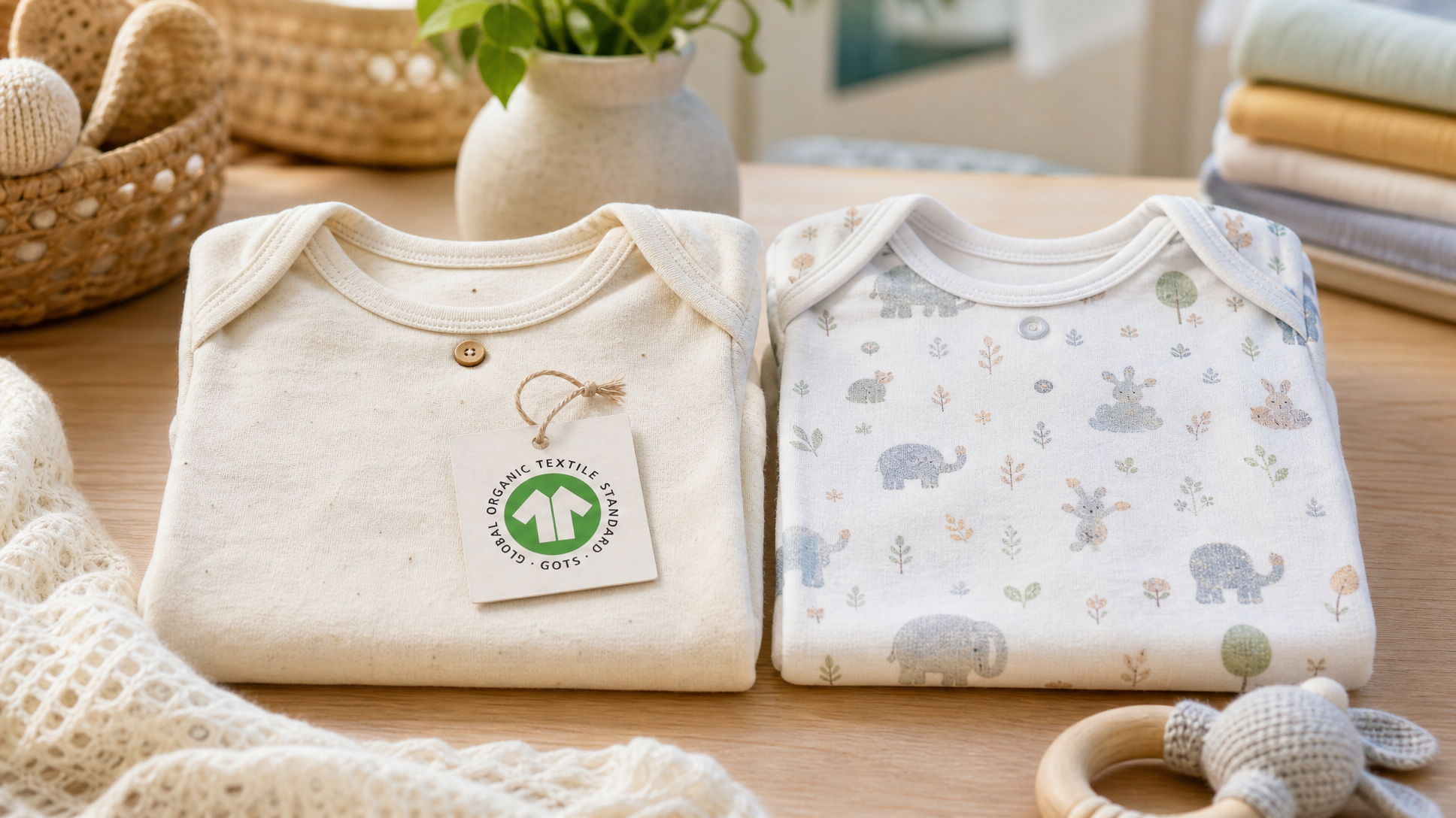
Look for GOTS certification if organic is your priority. The label "made with organic cotton" doesn't guarantee the dyes or finishing processes were clean. GOTS certification, overseen by the Global Organic Textile Standard, covers the full supply chain. It's the more meaningful mark.
Don't ignore fabric weight and weave. A well-constructed conventional cotton garment in a breathable weave can be gentler on sensitive skin than a loosely made organic one. Fabric quality isn't only about what the cotton was grown with.
Buy secondhand organic when you can. Pre-washed, pre-softened organic garments from a trusted secondhand source give you the fabric benefit at a fraction of the price. Especially smart for those fast-growth early sizes.
The Bottom Line
You don't have to choose between caring about what touches your baby's skin and staying within a real budget. Spend on the pieces that matter most — sleepwear, base-layer bodysuits, newborn essentials — and be practical about everything else. That's not compromising. That's shopping smart.
If you're building out your baby's wardrobe and want quality options across the range, explore the full clothing selection at Cutebabybuy — mid-range prices, with pieces across all the categories mentioned here. And if you're figuring out how to dress your baby for changing seasons on top of all this, our guide on dressing a baby for every season is worth a read next.
Frequently Asked Questions
Is organic baby clothing actually safer than conventional cotton?
Organic cotton is grown without synthetic pesticides and, when certified by GOTS, is processed without harsh chemicals through the entire production chain. For most healthy babies, well-washed conventional cotton carries low risk. However, babies with sensitive skin, eczema, or allergies may benefit more noticeably from organic fabrics, especially in garments worn directly against skin for long periods.
What does GOTS certification mean on baby clothes?
GOTS stands for Global Organic Textile Standard. It certifies not just that the cotton was grown organically, but that the entire production process — including dyeing and finishing — meets strict environmental and social criteria. It's a more comprehensive guarantee than a simple "made with organic cotton" label, which only refers to the raw fiber.
Should I wash new baby clothes before the first use, even if they're organic?
Yes — always. Washing removes any surface residues from packaging, storage, or shipping, and it softens the fabric. This applies to both organic and conventional garments. A gentle, fragrance-free baby detergent is a good choice for that first wash.
Is it worth buying organic clothes in newborn sizes if babies outgrow them so fast?
It's a fair trade-off to consider. Newborn skin is more sensitive, which is one argument for organic in those early weeks. But the size window is very short, sometimes just a few weeks. A practical middle ground: invest in a few organic sleepwear and bodysuit pieces for the newborn stage, and fill the rest of the wardrobe with quality conventional options or secondhand organic finds.

