

If you've ever squeezed a rubber bath toy and watched a thin stream of black water shoot out, you already know the problem. Mold loves the inside of bath toys — the warm, wet, dark interior is basically a perfect habitat — and once it's in there, it's nearly impossible to get out. Most parents just quietly throw the toy away and buy another one, which is fine until the cycle repeats.
The good news: this isn't inevitable. Some bath toys are actually designed with cleanup in mind, and choosing the right ones from the start saves you a lot of quiet disgust later. Here's what to look for.
The Real Problem with Most Bath Toys
The classic rubber squirt toy has a small hole at the bottom so water can be sucked in and shot out. That's the fun part. The problem is that same hole traps water inside after bath time, and there's no good way to get it fully dry. Mold and mildew follow.
Even toys without a squirt function can trap water in crevices, along seams, or in hollow interiors. If a toy has an opening of any kind and you can't reach inside to dry it, you're eventually going to have a mold problem.
The fix isn't to avoid bath toys entirely — it's to choose designs where water has somewhere to go, or where the toy comes apart so you can actually clean it properly.
What to Actually Look for When Buying Bath Toys
1. Toys That Pop Apart for Cleaning
This is the single most useful feature a bath toy can have. If you can separate the pieces, you can clean every surface — no guessing what's growing inside.
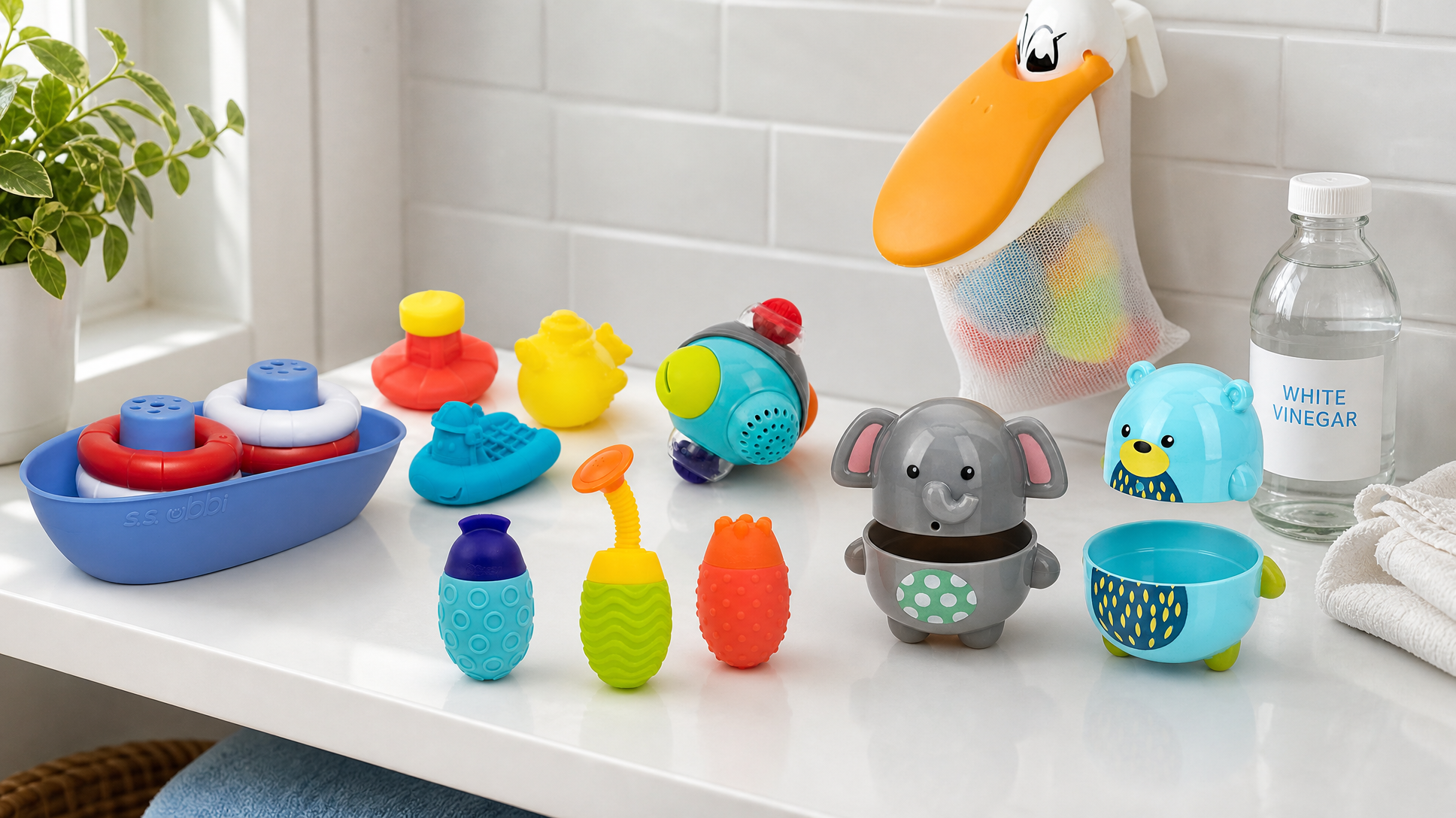
The Nuby Silly Squirts Bath Toys, Easy to Clean Children's Bath Toy, Bear and Elephant are a good example of this done right. The bear and elephant characters are designed to pop apart — tops separate from bottoms — so you can clean each piece thoroughly rather than hoping water drains out on its own. Kids can also mix and match the tops and bottoms, which keeps the play interesting. It's a smart design: the thing that makes cleanup easy (separable pieces) is also what makes the toy more engaging.
2. Open Designs with No Hollow Interiors
Solid or open-structure toys don't trap water the way hollow ones do. A boat that floats on the surface, stacking rings, or buoys that sit on a peg — none of these have the same mold risk as a sealed rubber animal with a pinhole at the base.
The Ubbi Boat & Buoys Bath Toys set — a blue boat with two funnels and four red and white buoys that stack onto them — is a good illustration. The buoys are ring-shaped, the boat is an open vessel, and there are no sealed cavities for water to hide in. After bath time, the whole set dries quickly and there's nothing to squeeze, open, or worry about. The set is also designed to support hand-eye coordination as toddlers stack and arrange the buoys, so it earns its place in the tub beyond just being low-maintenance.
3. Multi-Piece Sets That Offer Variety (and Justify the Cleanup Effort)
A toy that's genuinely fun buys you more cooperation at bath time, which matters when you're dealing with a toddler who'd rather be anywhere else. Sets with several different play types — floating, squirting, stacking, pouring — hold attention longer than a single toy.
The Sassy Light Up Buoy, Boats, Shower Ball & Ez Squeezies Bath Toys 7-Piece Set covers a lot of ground: a light-up buoy, two boats, a rain shower bath ball, and three EZ Squeezies, all suited for babies six months and up. The variety means different textures, different types of play, and enough novelty to keep bath time from feeling like a chore. With a set like this, it's worth building a quick rinse-and-dry routine into your post-bath cleanup — more pieces means more to manage, but the play value is proportionally higher.
4. Storage That Actually Dries the Toys
Even the best-designed toys will develop problems if they sit in a puddle at the bottom of the tub. Good storage keeps toys off wet surfaces and lets air circulate so they dry between baths.
The KidsKit Bath Toy Organizer from Rotho Babydesign addresses this directly. It's a pelican-shaped organizer that hooks over the side of the tub, with a mesh net that holds toys off the tub floor and lets water drain and air circulate. The pelican design is charming enough that kids actually want to put toys away — which is a small win worth appreciating. Proper storage is the last line of defense against mold, and a mesh bag hung above the waterline does a genuinely better job than a plastic bin sitting in a puddle.
A Simple Cleanup Routine That Actually Works
Even well-designed toys benefit from a basic routine. After each bath, shake excess water off every piece and hang or prop toys somewhere with airflow — not piled in a corner. Once a week, a quick rinse with diluted white vinegar and a thorough dry is enough to stay ahead of any buildup. For toys that come apart (like the Nuby Silly Squirts), pop them open during the weekly clean so every surface gets attention.
The goal isn't perfection — it's staying ahead of the problem rather than discovering it after the fact.
The Bottom Line
Bath toys don't have to be a mold factory. Choose designs with no sealed hollow interiors, or ones that come apart for real cleaning, pair them with storage that lets air do its job, and the whole system becomes much more manageable. The tub stays fun, cleanup stays quick, and you stop quietly throwing toys in the bin every few months.
Browse the full Bath & Diapering collection at Cutebabybuy to find bath toys and organizers designed to make the whole routine easier — for your child and for you.
Frequently Asked Questions
How do I get mold out of bath toys that already have it?
For toys with visible mold inside, soaking in a diluted white vinegar solution and then rinsing thoroughly can help. However, if the mold is deep inside a sealed toy and you can't reach or dry the interior, it's generally safer to replace it. This is exactly why choosing toys with open designs or separable pieces from the start saves a lot of hassle.
At what age can babies start using bath toys?
Many bath toys are designed for babies six months and up, once they can sit supported in the tub. Always check the age recommendation on the specific toy, and supervise closely during bath time regardless of age. Simpler toys with fewer small parts are generally better suited for younger babies.
Is a mesh bath toy organizer better than a plastic bin?
For drying purposes, yes. A mesh organizer hung over the side of the tub allows water to drain freely and air to circulate around the toys, which significantly reduces the chance of mold forming. A solid plastic bin sitting on the tub floor tends to collect standing water at the bottom, keeping toys damp between baths.
How often should I replace bath toys?
There's no fixed rule, but inspect toys regularly for discoloration, a musty smell, or visible mold — any of these are signs it's time to replace. Toys with open, easy-to-clean designs will generally last longer than sealed hollow ones. A consistent weekly cleaning routine extends the life of most well-made bath toys considerably.

