

Every wearable pump review you find online seems to be written by someone who slipped the cups under a B-cup bra and called it a day. If you're a D cup or above, you already know that's not your reality. The cups gap. The flange sits at the wrong angle. The suction feels shallow. And by the time you've returned two pumps and spent hours in Facebook mom groups asking if anyone else has this problem — yes, they do — you're exhausted before your baby even arrives.
This guide is for you. Not the average fit. You.
Why Wearable Pumps Fit Differently on Larger Breasts
Most wearable pumps are designed as a single compact unit: a flange, a collection cup, and a motor, all stacked together and held in place by your bra. That works reasonably well when the breast sits neatly inside the cup. But with a larger, heavier breast, a few things go wrong fast.
First, the weight. A fuller breast pulls the entire pump unit downward, breaking the seal between the flange and your skin. When that seal breaks, suction drops — and you'll feel it as that frustrating on-and-off sensation instead of a consistent draw.
Second, the angle. The nipple needs to sit centered in the flange tunnel to move freely during pumping. On a larger breast, the natural hang and projection of the tissue often pushes the nipple off-center, especially if the cup is too shallow to accommodate the breast's forward depth.
Third, bra compatibility. Wearable pumps rely on your bra to hold them in place. A nursing bra that fits a C cup will have a very different cup depth and band tension than one sized for an F or G — and if the bra isn't doing its job of pressing the pump firmly against the breast, no amount of suction adjustment will fix the leak.
The Flange Is the First Thing to Get Right
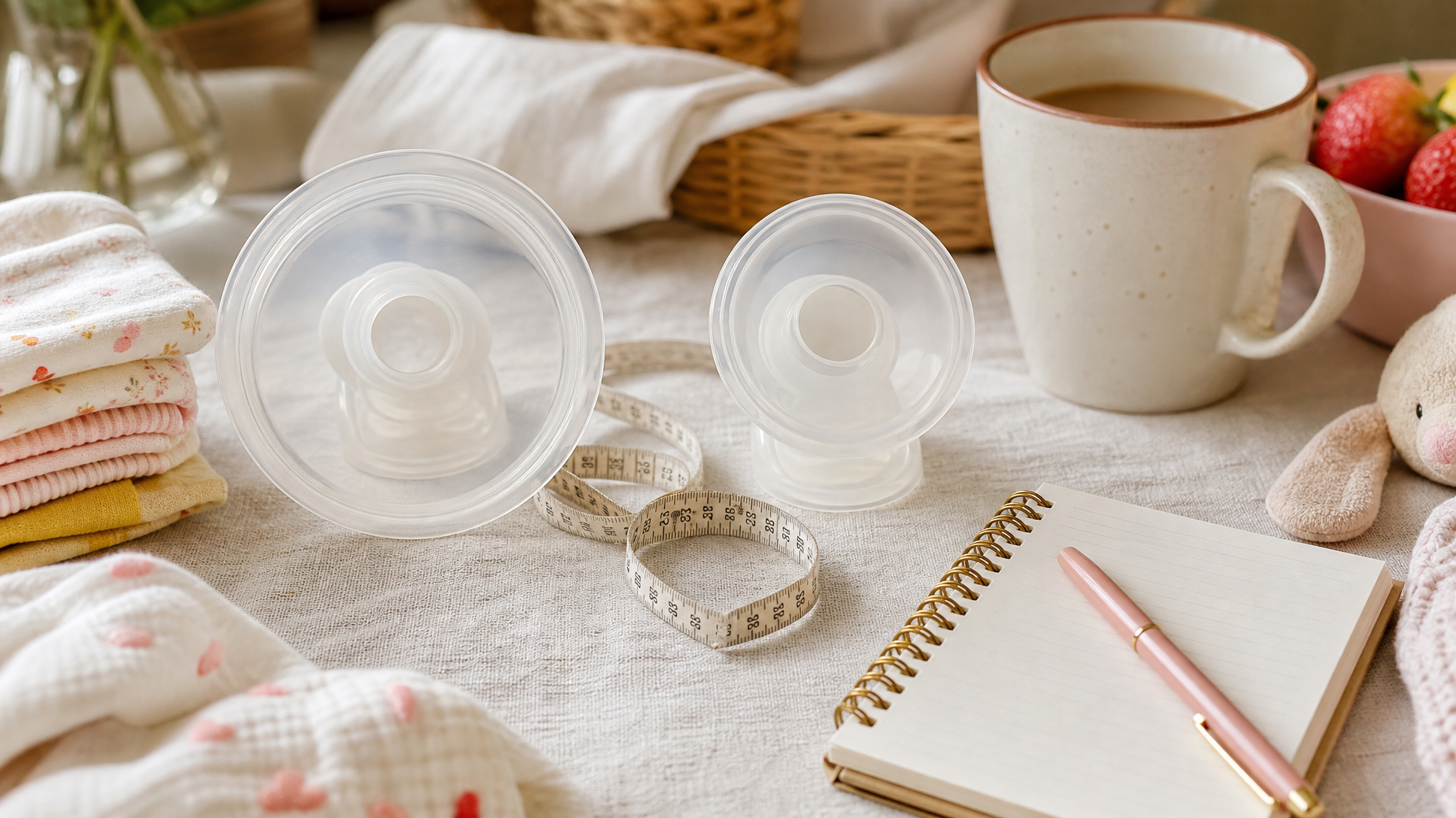
Before you think about brand, motor strength, or app connectivity, figure out your flange size. This is the tunnel-shaped piece that your nipple sits inside during pumping, and it's the single biggest factor in whether a pump is comfortable and effective for you.
Flange size is measured by the diameter of the tunnel opening — and it's sized to your nipple, not your breast size. A larger cup size does not automatically mean you need a larger flange. What matters is your nipple diameter, measured in millimeters. The nipple should move freely inside the tunnel without rubbing the sides, and the areola should not be pulled in.
The problem for larger-breasted moms isn't usually the flange size itself — it's that many wearable pumps come with only one or two flange sizes in the box, and the range they offer is narrow. Before committing to any model, check: what flange sizes does this pump support? Are larger sizes available separately? Some brands offer a wide range; others top out at a size that won't work for everyone.
If a pump's maximum flange size is still too small for your nipple, move on. No other feature compensates for a flange that doesn't fit.
Cup Depth and Breast Projection Matter More Than You Think
Cup depth is how far the wearable unit extends from your chest wall into the bra cup. For a fuller breast with more projection, you need a cup that can accommodate that depth without the front of the pump pressing uncomfortably against the inside of your bra.
Some wearable pumps are quite slim and low-profile — great for a smaller bust, but they can end up sitting at an angle on a larger breast because the breast itself pushes the bottom of the cup outward. When that happens, the flange tilts, the nipple goes off-center, and you're back to that shallow, ineffective suction.
Look for models where reviewers with larger cup sizes specifically mention that the cup sits flush and stable. This is one area where real user reviews in plus-size or breastfeeding communities are more useful than any official product description.
Your Bra Does Half the Work
A wearable pump is only as stable as the bra holding it in place. For larger breasts, this matters even more because there's more weight working against the seal.
A few things to look for in a pumping bra if you're fuller-busted:
- A firm, supportive band. This is what keeps the pump pressed against your breast. A stretchy, loose band lets the pump sag.
- Deep cup construction. Shallow cups won't hold a wearable pump flat against the breast — the cup will pop forward or tilt.
- Adjustable or wide straps. These help distribute weight and keep the bra from riding up, which shifts the pump position.
- A snug but not compressive fit. Too tight and you risk blocked ducts; too loose and the pump moves around.
Some moms with larger busts find that layering a well-fitted underwire nursing bra under a hands-free pumping bra gives them the support and stability they need. It's not glamorous, but it works.
Questions to Ask Before You Buy Any Wearable Pump
Use this as your checklist when you're comparing models:
- What flange sizes are available, and what's the maximum? Confirm the full range, not just what comes in the box.
- Can I buy replacement or larger flanges separately? Proprietary flanges that only come in one size are a red flag.
- How deep is the cup unit? If the brand doesn't publish this, look for reviews from moms who mention their cup size explicitly.
- What's the return or exchange policy? Fit is personal. A pump that works perfectly for one body may not work for yours, and you should be able to return it if the fit is genuinely wrong.
- Does the suction pattern feel like it empties fully? Larger breasts often have more tissue, and a pump with limited suction depth may leave you feeling incompletely drained. Look for adjustable suction modes.
One More Thing: Don't Ignore the Weight of the Unit
Wearable pumps vary in how heavy the motor and collection cup are. A heavier unit on a larger breast means more downward pull, more seal disruption, and more discomfort over a long pumping session. If you're planning to pump multiple times a day, that weight adds up. Lighter isn't always better in terms of motor quality, but it's worth factoring in — especially if you're planning to pump while moving around or working.
The Bottom Line
The right wearable pump for a larger cup size isn't necessarily the most expensive one or the most popular one in reviews — it's the one where the flange fits your nipple correctly, the cup sits stable against your breast, and your bra can actually hold it in place. Get those three things right, and the rest of the features are a bonus.
To support your whole feeding journey — from pumping to latching to those early exhausted weeks — browse breastfeeding accessories and breastfeeding pillows at Cutebabybuy. Everything ships from the USA, and there's no shortage of options to help you find what actually works for your body.
Frequently Asked Questions
How do I measure my nipple size to find the right flange?
Use a soft measuring tape or a ruler to measure the diameter of your nipple at its base — not the areola, just the nipple itself. Measure in millimeters. Most flange sizing guides recommend adding a small amount to that measurement to get your tunnel size, but the exact recommendation varies by brand, so check the specific pump's sizing chart. When in doubt, a lactation consultant can measure you and help you find the right fit.
Can I use a regular nursing bra with a wearable pump, or do I need a special pumping bra?
You'll generally need a hands-free pumping bra, or a nursing bra with a hands-free insert, to keep the wearable cups stable. A regular nursing bra typically has openings for nursing access but won't hold the pump cups firmly against your breast. For larger cup sizes especially, look for a pumping bra with a firm band and deep cups rather than a very stretchy, one-size-fits-most style.
Why does my wearable pump keep losing suction?
Lost suction almost always comes down to a broken seal between the flange and your skin. The most common culprits are a flange that's the wrong size, a cup that's tilting because your breast is pushing it outward, or a bra that's too loose to hold the pump firmly in place. Check all three before assuming the pump itself is faulty. Also inspect the silicone membrane or valve on the pump — a small crack or improper seating can cause suction to drop even when the fit is otherwise correct.
Is a wearable pump as effective as a traditional electric pump for moms with larger breasts?
It can be, but it depends heavily on fit. A well-fitted wearable pump with the right flange size and a stable bra can be very effective. The challenge is that wearable pumps offer less adjustment in terms of how the cup sits against the breast compared to a traditional pump where you hold the flange yourself. Some moms with larger breasts find they get better output from a traditional pump and use a wearable pump for convenience on the go. It's worth trying both if you can, especially in those first weeks when you're establishing your supply.

