


You will not be allowed to compare more than 4 products at a time
View compareAvima 4 Oz Anti Colic Newborn Baby Bottles, Bpa Free, Standard Neck With Slow Flow Nipples (Set Of 8)
Avima 4 Oz Anti Colic Newborn Baby Bottles, Bpa Free, Standard Neck With Slow Flow Nipples (Set Of 8)
Regular price
$34.26 USD
Sale price
$34.26 USD
Regular price
$34.26 USD
Unit price
per
Shipping calculated at checkout.
Out of stock
Out of stock
Sold by CuteBabyBuy — Trusted baby & kids' products store, operated by AmiVentures Inc.
Returns accepted within 30 days | support@cutebabybuy.com
Shipping Information
- Free Standard Shipping — United States only
- Processing Time: 3–5 business days
- Estimated Delivery: 6–10 business days after dispatch
- Securely packed to ensure your purchase arrives in perfect condition
- Tracking number sent via email once dispatched
Returns & Refund
Returns accepted within 30 days of delivery.
Damaged or Defective Item
Free return shipping + replacement or full refund
Wrong Item Received
Free return shipping + replacement or full refund
Change of Mind
Return shipping at customer's expense · Item must be unused & in original packaging
All returns require a Return Authorization (RA) number before sending.
View Full Return & Refund Policy
Safety & Compliance
⚠️
California Proposition 65 Warning
Some products sold on this website may expose you to chemicals known to the State of California to cause cancer, birth defects, or other reproductive harm.
www.P65Warnings.ca.gov
🛒
General Product Safety Advisory
Always read the product label, instructions, and safety warnings before use. Do not use damaged or modified products. Store products in appropriate conditions as specified by the manufacturer.
Keep all products out of reach of children unless specifically designed for their use.
ℹ️
Product Authenticity & Notice
All products sold by CuteBabyBuy are 100% authentic, sourced directly from trusted suppliers in the USA. Product colors and dimensions may vary slightly from images due to screen calibration and manufacturing tolerances.
CuteBabyBuy — Operated by AmiVentures Inc. Delivered Nationwide.
Share
Couldn't load pickup availability
Guarantee safe and secure checkout
Description
Description
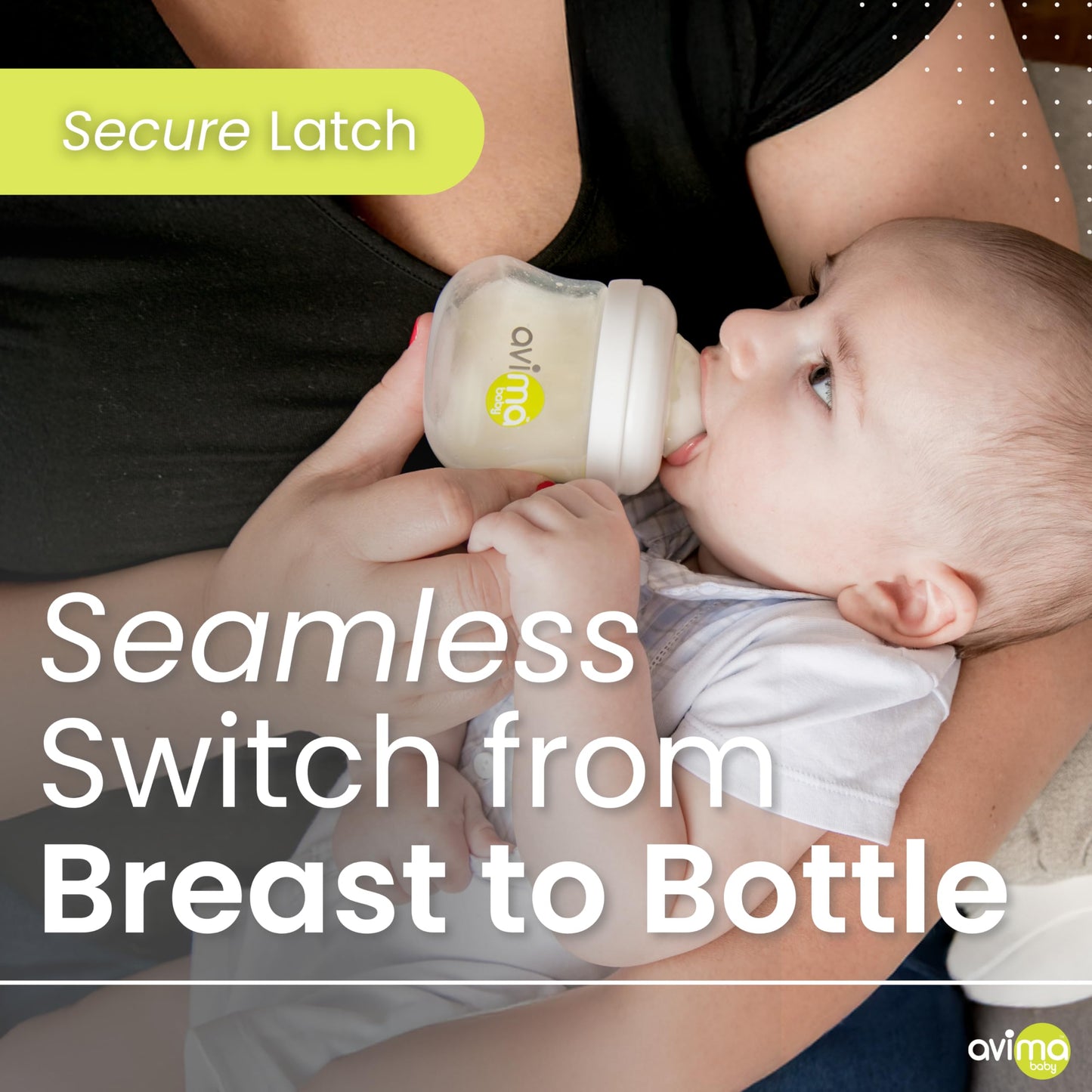
Avima baby bottles with Duo-Flo silicone nipples have valves that flex and adjust the flow of milk according to your babyAs feeding pace, so your baby can drink without interruption This minimizes the air going into your babyAs stomach which can reduce colic, gas and spit-up It has a Standard Neck opening and is compatible with most Standard Neck Breast Pumps These 4 oz bottles comes with stage 1, slow flow nipples Different flow rates are available so you can use the same bottle as your baby grows


Frequently Asked Questions
- Q: What material are the Avima baby bottles made of? A: The Avima baby bottles are made of polypropylene, which is BPA free for safety.
- Q: How many bottles come in a set? A: This product comes in a set of eight bottles, each with a four-ounce capacity.
- Q: What type of nipples do these bottles have? A: These bottles include stage one slow flow silicone nipples designed for newborns.
- Q: What is the size of each baby bottle? A: Each Avima baby bottle has a four-ounce capacity, ideal for newborn feeding.
- Q: Are the bottles compatible with breast pumps? A: Yes, these bottles have a standard neck opening, making them compatible with most standard neck breast pumps.
- Q: How do I use the Avima baby bottles? A: To use the bottles, fill them with milk or formula, attach the nipple, and feed your baby at their own pace.
- Q: Can these bottles be used for older babies too? A: Yes, different flow rates are available, allowing you to use the same bottle as your baby grows.
- Q: How do I clean the baby bottles? A: You can clean the bottles with warm soapy water or place them in the dishwasher for convenience.
- Q: Are the baby bottles safe for my baby? A: Yes, these bottles are made from BPA-free materials, prioritizing your baby's safety and health.
- Q: What is the best way to store these bottles? A: Store the bottles in a cool, dry place and ensure they are completely dry before sealing.
- Q: Can I microwave the Avima baby bottles? A: Yes, these bottles are microwave safe; just ensure the nipple is removed before heating.
- Q: What should I do if a bottle arrives damaged? A: If a bottle arrives damaged, contact customer support for a replacement or refund.
- Q: Is there a warranty for these baby bottles? A: Yes, Avima offers a limited warranty on manufacturing defects for their bottles.
- Q: Are the bottles easy to handle for newborns? A: Yes, the lightweight design and standard neck make these bottles easy to handle during feeding.
- Q: How do I know when to change the nipples? A: Change the nipples as your baby grows and needs faster flow rates, typically around six months.