


You will not be allowed to compare more than 4 products at a time
View compareTiny Twinkle Mess-Proof Baby Bib - Waterproof Bib For Baby Girl - Machine Washable - Adjustable Closure - Pvc Bpa & Phthalate Fr
Tiny Twinkle Mess-Proof Baby Bib - Waterproof Bib For Baby Girl - Machine Washable - Adjustable Closure - Pvc Bpa & Phthalate Fr
Regular price
$23.68 USD
Sale price
$23.68 USD
Regular price
$23.68 USD
Unit price
per
Shipping calculated at checkout.
Out of stock
Out of stock
Sold by CuteBabyBuy — Trusted baby & kids' products store, operated by AmiVentures Inc.
Returns accepted within 30 days | support@cutebabybuy.com
Shipping Information
- Free Standard Shipping — United States only
- Processing Time: 3–5 business days
- Estimated Delivery: 6–10 business days after dispatch
- Securely packed to ensure your purchase arrives in perfect condition
- Tracking number sent via email once dispatched
Returns & Refund
Returns accepted within 30 days of delivery.
Damaged or Defective Item
Free return shipping + replacement or full refund
Wrong Item Received
Free return shipping + replacement or full refund
Change of Mind
Return shipping at customer's expense · Item must be unused & in original packaging
All returns require a Return Authorization (RA) number before sending.
View Full Return & Refund Policy
Safety & Compliance
⚠️
California Proposition 65 Warning
Some products sold on this website may expose you to chemicals known to the State of California to cause cancer, birth defects, or other reproductive harm.
www.P65Warnings.ca.gov
🛒
General Product Safety Advisory
Always read the product label, instructions, and safety warnings before use. Do not use damaged or modified products. Store products in appropriate conditions as specified by the manufacturer.
Keep all products out of reach of children unless specifically designed for their use.
ℹ️
Product Authenticity & Notice
All products sold by CuteBabyBuy are 100% authentic, sourced directly from trusted suppliers in the USA. Product colors and dimensions may vary slightly from images due to screen calibration and manufacturing tolerances.
CuteBabyBuy — Operated by AmiVentures Inc. Delivered Nationwide.
Share
Couldn't load pickup availability
Guarantee safe and secure checkout
Description
Description
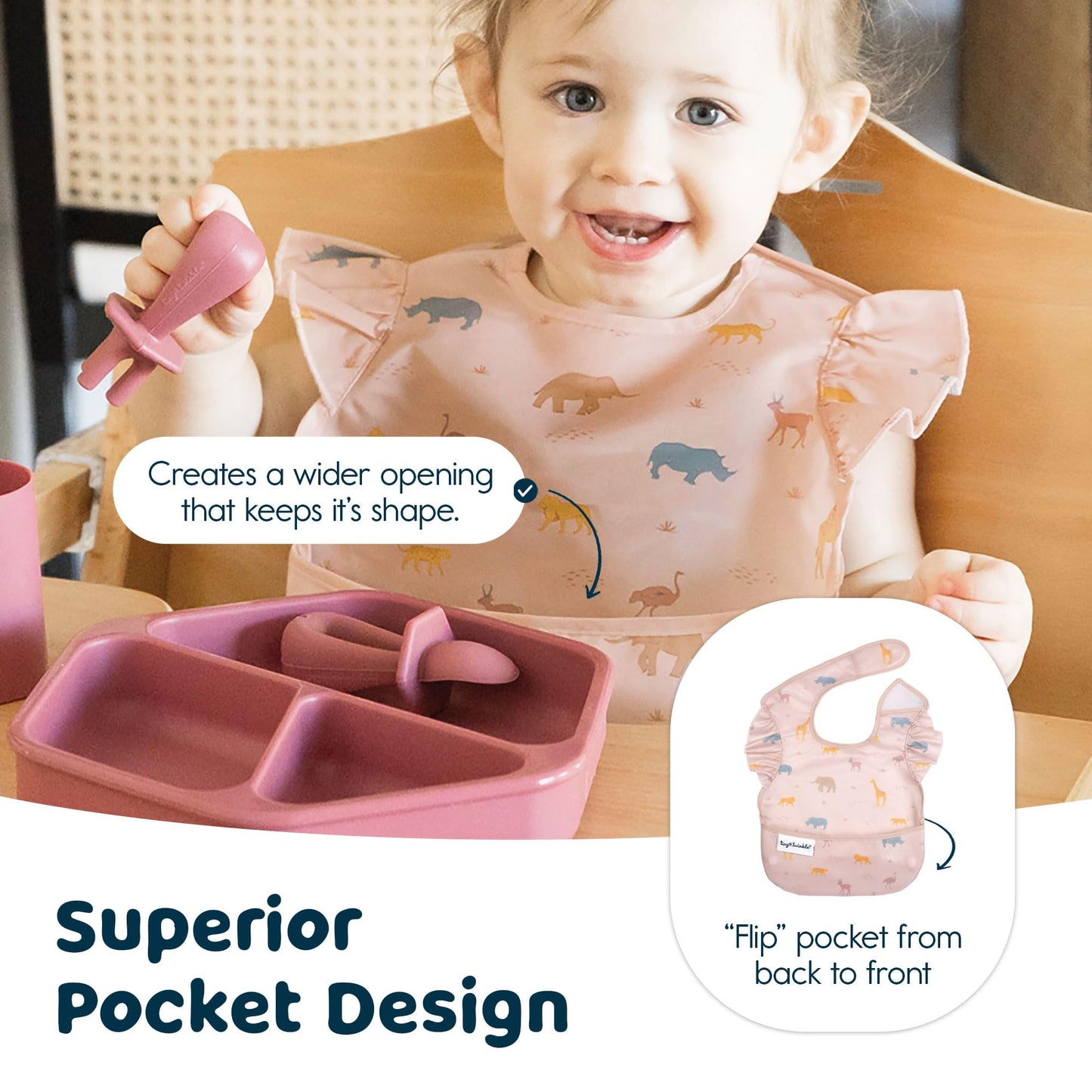
Few items are more crucial in your baby eating supplies pack than food bibs - Tiny Twinkle is proud to offer you a waterproof bib made with 100% recycled polyester, often called rPet, which is made from recycled plastic bottles. While diverting plastic away from landfills, the production of recycled polyester requires far fewer resources than that of new fibers. Moreover, our food catching bib features a bottom pocket designed to stay open to catch spills! Soft, lightweight, and waterproof, our infant bibs have a no-scratch closure that's gentle on your child while simultaneously protecting clothes, floors, and tables from messes. Bring your baby anywhere with total confidence knowing you've got the right toddler bib for the job. Featuring an adjustable side closure that keeps the bib on when you want it and makes removal extra easy, our infant waterproof bibs won't get caught on your little one's hair. Feeding time can be stressful enough without worrying about the mess - our mess-proof kids bibs take the hassle and frustration out of food time! Our cleverly designed premium quality baby feeding bibs are OEKO-TEX Standard 100 certified, meaning our fabric is free of any potentially harmful chemicals, even those not legally regulated. The safety of your baby always comes first with our Tiny Twinkle Bibs.


Frequently Asked Questions
- Q: What materials are used in the Tiny Twinkle Bib? A: The Tiny Twinkle Bib is made from one hundred percent recycled polyester, known as rPet, derived from recycled plastic bottles.
- Q: How many bibs come in the Tiny Twinkle pack? A: The Tiny Twinkle pack includes three bibs, providing a convenient supply for feeding time.
- Q: What is the color of the Tiny Twinkle Bib? A: The Tiny Twinkle Bib features a design called 'Petite Safari,' offering a charming and playful aesthetic.
- Q: How do you use the Tiny Twinkle Bib? A: To use the Tiny Twinkle Bib, simply place it around your child's neck and adjust the side closure for a secure fit.
- Q: Is the Tiny Twinkle Bib suitable for travel? A: Yes, the Tiny Twinkle Bib is designed to be lightweight and waterproof, making it an excellent choice for travel.
- Q: Can the Tiny Twinkle Bib fit different sizes? A: Yes, the bib features an adjustable side closure that accommodates various sizes, ensuring a comfortable fit for your child.
- Q: How should I clean the Tiny Twinkle Bib? A: The Tiny Twinkle Bib is machine washable, allowing for easy cleaning after messy meals.
- Q: Is the fabric of the Tiny Twinkle Bib safe for my baby? A: Yes, the fabric of the Tiny Twinkle Bib is OEKO-TEX Standard 100 certified, ensuring it is free from harmful chemicals.
- Q: Can the Tiny Twinkle Bib be used for messy eaters? A: Absolutely, the Tiny Twinkle Bib features a bottom pocket designed to catch spills, making it perfect for messy eaters.
- Q: What if my Tiny Twinkle Bib arrives damaged? A: If your Tiny Twinkle Bib arrives damaged, you should contact customer support for assistance with the return or exchange process.
- Q: Is the Tiny Twinkle Bib suitable for older children? A: The Tiny Twinkle Bib is designed primarily for infants and toddlers, making it ideal for younger children during feeding.
- Q: How does the adjustable closure work on the Tiny Twinkle Bib? A: The adjustable side closure on the Tiny Twinkle Bib allows you to easily secure the bib around your child's neck and remove it without tangling their hair.
- Q: Is the Tiny Twinkle Bib eco-friendly? A: Yes, the Tiny Twinkle Bib is made from recycled polyester, contributing to environmental sustainability by repurposing plastic waste.
- Q: What features make the Tiny Twinkle Bib unique? A: The Tiny Twinkle Bib has a waterproof design, a spill-catching pocket, and is made from eco-friendly materials, combining functionality with safety.
- Q: Can I use the Tiny Twinkle Bib for all types of food? A: Yes, the Tiny Twinkle Bib is versatile and can be used for various types of food, helping to keep your child clean during meals.